To be honest, these days everyone’s talking about lightweight, high-strength, and quick deployment. It’s all buzzwords, right? But there's a reason. I’ve been on sites where delays cost companies fortunes, and every pound of weight matters when you're hauling stuff up ten flights of stairs. PVC layflat hose suppliers are finally getting the attention they deserve. Not just for irrigation anymore, you know? More and more folks are realizing how versatile these things are. They’re starting to think beyond just water.
Have you noticed how often projects get held up because of something simple like getting water to a remote location? Or quickly draining a flooded area? That’s where these layflat hoses really shine. It's not glamorous, but it keeps things moving.
Anyway, I think the biggest shift is people demanding quicker turnaround times and less reliance on heavy, cumbersome equipment. That pushes the demand for better pvc layflat hose suppliers, and not just cheaper ones.
The Rising Demand for Versatile Hoses
Strangely enough, it wasn’t always this way. For years, everyone just grabbed whatever hose was cheapest. Durability was an afterthought. But I’ve seen hoses literally split mid-operation – a disaster when you’re pumping against the clock. Now, with more projects prioritizing sustainability and efficiency, the demand for high-quality pvc layflat hose suppliers has really taken off. It's not just about preventing leaks; it’s about reducing downtime and waste.
We’re seeing a huge push for hoses that can handle more than just water – things like chemicals, slurry, even compressed air. It's a whole different ballgame when you start demanding that level of versatility.
Design Pitfalls & Material Choices
I encountered this at a factory in Ningbo last time. They were boasting about their super-cheap hoses, but the reinforcement layer was… well, let’s just say it looked like they’d used recycled fishing nets. The PVC itself feels flimsy, kind of plasticky, and smells strongly of chemicals. A good hose should have a subtle, almost rubbery scent.
One design pitfall I’ve seen a lot is inadequate burst pressure ratings. People assume a hose labeled "heavy-duty" can handle anything, but you’ve got to check the specs. Another is poor connector compatibility. You end up spending half your life wrestling with adaptors.
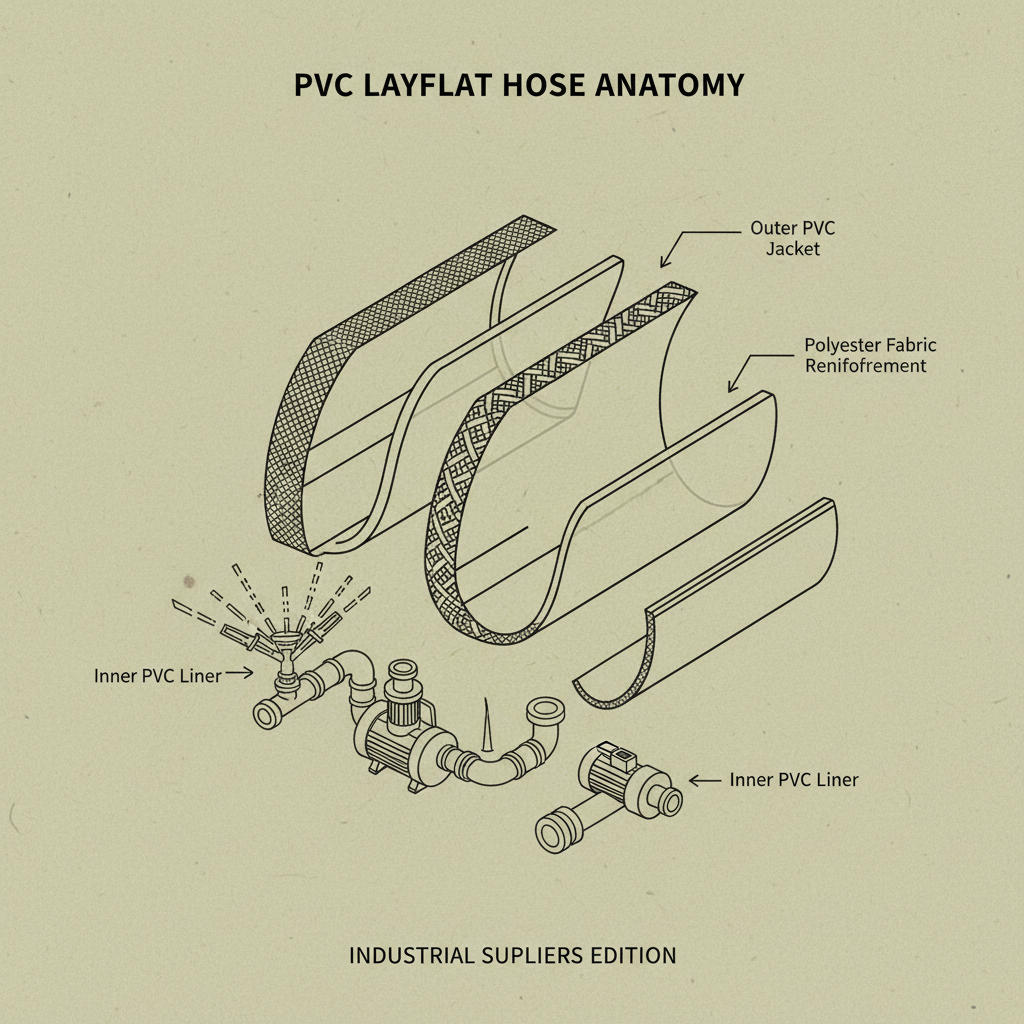
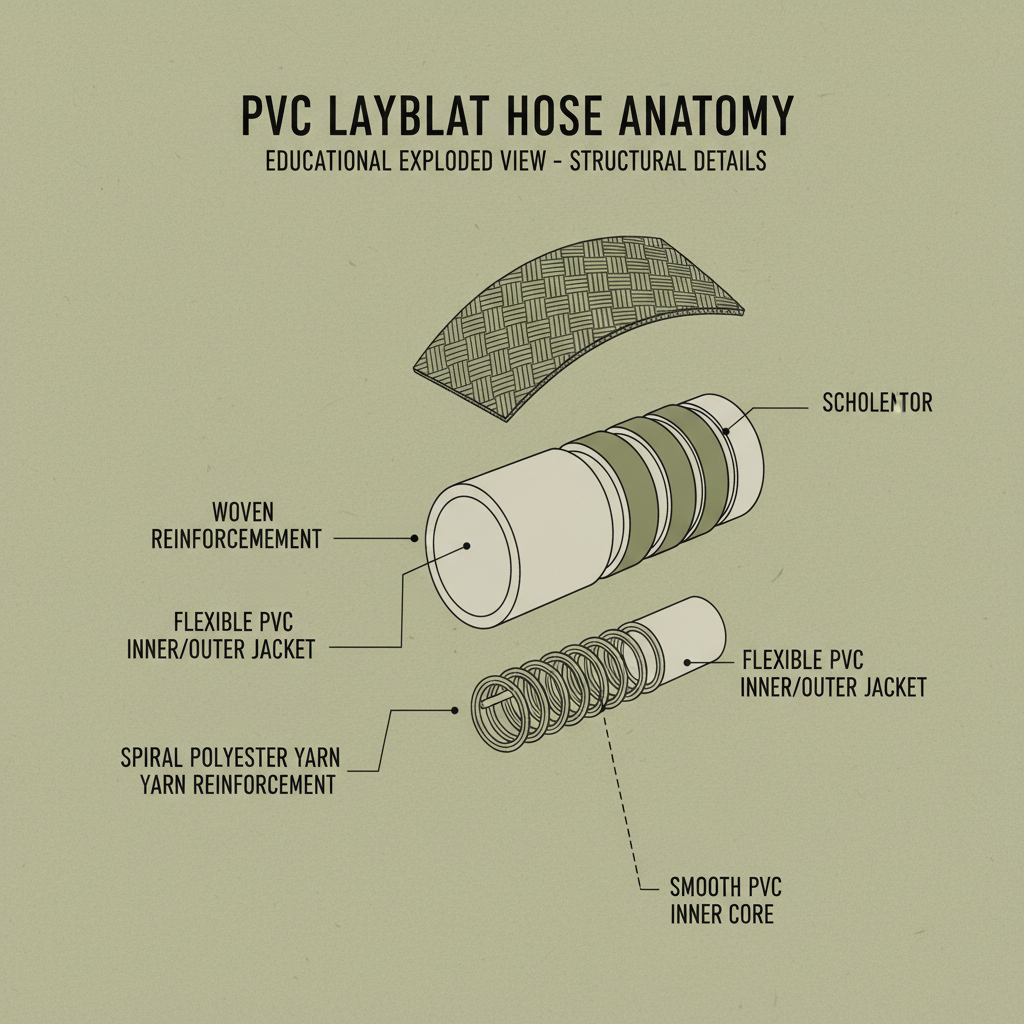
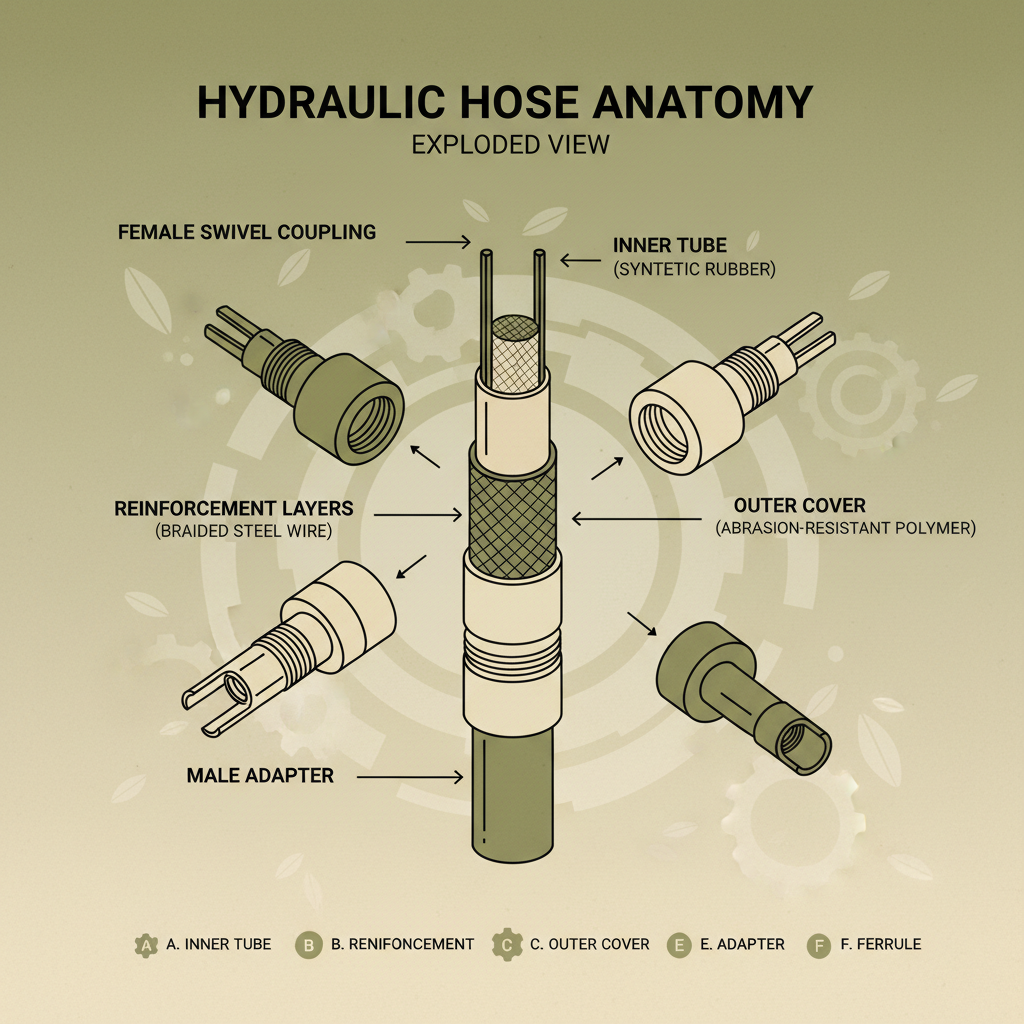
The material is crucial. High-tenacity polyester yarn for reinforcement is a must. It's what gives the hose its strength without adding a ton of weight. And the PVC compound needs to be UV-resistant and able to withstand a wide range of temperatures. Otherwise, you're looking at premature cracking and failure.
Real-World Testing & Application
Forget those lab tests with perfectly controlled conditions. I need to know how a hose performs when it’s being dragged across a muddy construction site, left out in the scorching sun, and repeatedly kinked and unkinked. That’s why we do our own field testing. We pump everything through these hoses – concrete, sludge, you name it.
I remember one project in Dubai, pumping seawater for cooling systems. The salt water was brutal on the hoses, but the ones with the reinforced PVC and high-quality yarn held up remarkably well. We also submerge them in different chemicals, simulating real-world conditions. It's messy, it's time-consuming, but it's the only way to be sure.
Users often underestimate the importance of proper storage. Leaving a layflat hose coiled tightly in direct sunlight will destroy it faster than anything. They need to be properly drained and stored in a cool, dry place.
Advantages, Disadvantages & Customization
Okay, let’s be real. These pvc layflat hose suppliers aren't perfect. They can be susceptible to abrasion if not handled carefully, and they're not ideal for extremely high-pressure applications. But the advantages far outweigh the drawbacks. They’re lightweight, flexible, easy to store, and relatively inexpensive.
Customization is a big thing now. Last month, that small boss in Shenzhen who makes smart home devices insisted on changing the interface to – because he wanted his hoses to "look modern." It was a pain, finding a supplier willing to work with such a small batch, but we managed it. You can also get custom lengths, diameters, and even specialized coatings.
Performance Metrics for Different pvc layflat hose suppliers
Key Performance Indicators
We look at a few key things. Burst pressure, obviously. But also tensile strength, elongation at break, and resistance to kinking. Those are the numbers that matter. It’s about how the hose behaves when it’s stressed.
We also track the rate of UV degradation. That’s a big one for outdoor applications. And we measure the flow rate at different pressures – you want to make sure you’re getting the volume you need.
Global Applications & Industries Served
It's not just construction anymore. Agriculture uses them for irrigation, of course. Disaster relief organizations rely on them for water supply in emergency situations. Mining companies use them for slurry transfer. And even the entertainment industry uses them for creating artificial waterfalls and spray effects!
We’ve been supplying hoses to projects in Southeast Asia, Africa, and South America. Each region has its own specific challenges. For example, in arid climates, you need hoses that can withstand intense heat and UV exposure. In tropical climates, you need hoses that are resistant to mold and mildew.
Supplier Assessment Criteria
I’ve seen too many suppliers cut corners. That’s why we have a rigorous vetting process. We look at their quality control procedures, their manufacturing capabilities, and their track record.
We also check their certifications – ISO 9001, for example. But certifications aren’t enough. We need to see evidence of consistent quality. We do on-site audits, inspect raw materials, and test finished products.
We also assess their ability to scale up production to meet our demands. And, honestly, responsiveness matters. If I need a quote or a sample quickly, I need a supplier who can deliver.
Key Supplier Attributes for Reliable pvc layflat hose suppliers
| Quality Control System |
Production Capacity |
Responsiveness & Support |
Pricing & Lead Times |
| Rigorous testing at each stage of production |
Ability to consistently deliver large volumes |
Fast turnaround on quotes and samples |
Competitive pricing with reasonable lead times |
| Detailed inspection reports for each batch |
Capacity to handle customized orders |
Dedicated account manager for ongoing support |
Transparency in pricing structure |
| Traceability of raw materials |
Flexible production scheduling |
Proactive communication and problem-solving |
Willingness to negotiate payment terms |
| Adherence to industry standards (ISO 9001) |
Investment in modern manufacturing equipment |
Availability of technical expertise |
Clear documentation of product specifications |
| Independent third-party testing |
Scalable infrastructure to support growth |
Efficient logistics and delivery network |
Minimum order quantity (MOQ) flexibility |
| Continuous improvement programs |
Strong commitment to sustainability |
Post-sales technical support and troubleshooting |
Volume discounts for long-term contracts |
FAQS
That really depends on the conditions. UV exposure is the biggest killer, so in really sunny climates, you might get 2-3 seasons out of it. With proper storage and care – draining it thoroughly after each use, keeping it out of the sun – you can easily extend that to 5 seasons or more. The quality of the PVC compound and the reinforcement material play a huge role too, obviously. Cheaper hoses will degrade much faster.
It's a bit of a gray area. Standard PVC isn't typically certified for potable water, but there are specialized PVC compounds that are. You need to specifically look for hoses labeled "NSF 61" or similar. Even then, I'd recommend flushing the hose thoroughly before using it for drinking water. And remember, stagnant water can breed bacteria, so don't leave it sitting in the hose for extended periods.
Simple: drain it completely, coil it loosely (don't kink it!), and store it in a cool, dry, dark place. Sunlight is your enemy. Avoid storing it near chemicals or solvents. A garage or shed is ideal. If you have to store it outdoors, cover it with a tarp. Don't just leave it lying on the ground!
Bursting due to overpressure is a big one, obviously. But more often, I see failures caused by UV degradation, abrasion, kinking, or improper storage. Sometimes, it’s just a faulty connection. Regular inspection is key. Look for cracks, bulges, or any signs of wear and tear. If you see something, replace the hose before it fails completely.
Small leaks can sometimes be patched with a PVC repair kit, but it's usually a temporary fix. The repair might not hold up under pressure, especially with repeated use. Honestly, if the hose is leaking, it's usually best to just replace it. The cost of a new hose is often less than the cost of downtime and frustration caused by a failing repair.
Reinforcement is everything. Non-reinforced hoses are fine for low-pressure applications, but they’re easily damaged. Reinforced hoses – with those polyester yarn layers – can handle much higher pressures, resist kinking, and last a lot longer. It’s worth the extra investment, especially if you’re using the hose in a demanding environment.
Conclusion
Ultimately, whether you’re dealing with lightweight construction, disaster relief, or agricultural irrigation, pvc layflat hose suppliers offer a cost-effective and versatile solution for fluid transfer. They're not a magic bullet, but they’re a reliable workhorse when chosen and used correctly. It’s about finding the right balance between price, performance, and durability.
Anyway, I think the key takeaway is this: don’t skimp on quality. A cheap hose might save you a few bucks upfront, but it’ll cost you more in the long run. And ultimately, whether this thing works or not, the worker will know the moment he tightens the screw. That’s what matters.