You know, after running around construction sites all year, you start to see patterns. Lately, everyone's talking about prefabrication. It's supposed to be the future, right? Faster, cheaper, more controlled quality. But to be honest, I’ve seen a lot of projects where "prefabricated" just means "more problems moved to a different location." It’s not a silver bullet, believe me. And the push for lighter materials… that’s big too. Everyone wants to save on transport costs.
Have you noticed how many designs still try to reinvent the wheel? I encountered this at a factory in Ningbo last time – this engineer was convinced he’d designed a self-sealing joint that was "revolutionary." Revolutionary at leaking, maybe. It’s always the little things that bite you. People forget what it's like to actually build with this stuff. They draw these elegant lines on a computer, but haven't felt the weight of a component or wrestled with it in the rain.
We mostly work with PVC, obviously. But it’s not just any PVC. The good stuff…you can smell it, oddly enough. It has this slightly sweet, plastic odor that means it hasn't been cut with cheap fillers. And the feel – it's got a certain weight, a bit of give. Cheap PVC is brittle, feels hollow. We’ve been moving towards more flexible PVC compounds, too. Less cracking in cold weather, which is crucial up north. It's not glamorous, but without good PVC, everything falls apart.
The Current Landscape of pvc hose supplier
Strangely enough, a lot of people still think of PVC as… well, cheap plastic. But the advancements in formulation are incredible. We’re seeing a huge demand for high-performance PVC that can withstand extreme temperatures, corrosive chemicals, and constant abrasion. It’s not just about hoses anymore, it's about complete fluid handling systems, and the PVC needs to be up to the task. Demand is up 20% year-over-year, especially in infrastructure projects.
It’s a global market, obviously. China is the biggest producer, but quality control can be… inconsistent. We’ve had to start doing more rigorous independent testing to make sure we’re getting what we pay for. European manufacturers generally have a better reputation for consistency, but they’re pricier.
Common Design Pitfalls in pvc hose supplier Applications
I've seen engineers specify hoses with ridiculously tight bend radii. They look great on paper, but try getting a fully loaded hose around a corner on a muddy construction site. It's a nightmare. And then there's the issue of pressure ratings. People underestimate the dynamic pressure surge from pumps – especially if they're not properly dampened. A hose might be rated for 300 PSI steady pressure, but a surge can easily double that.
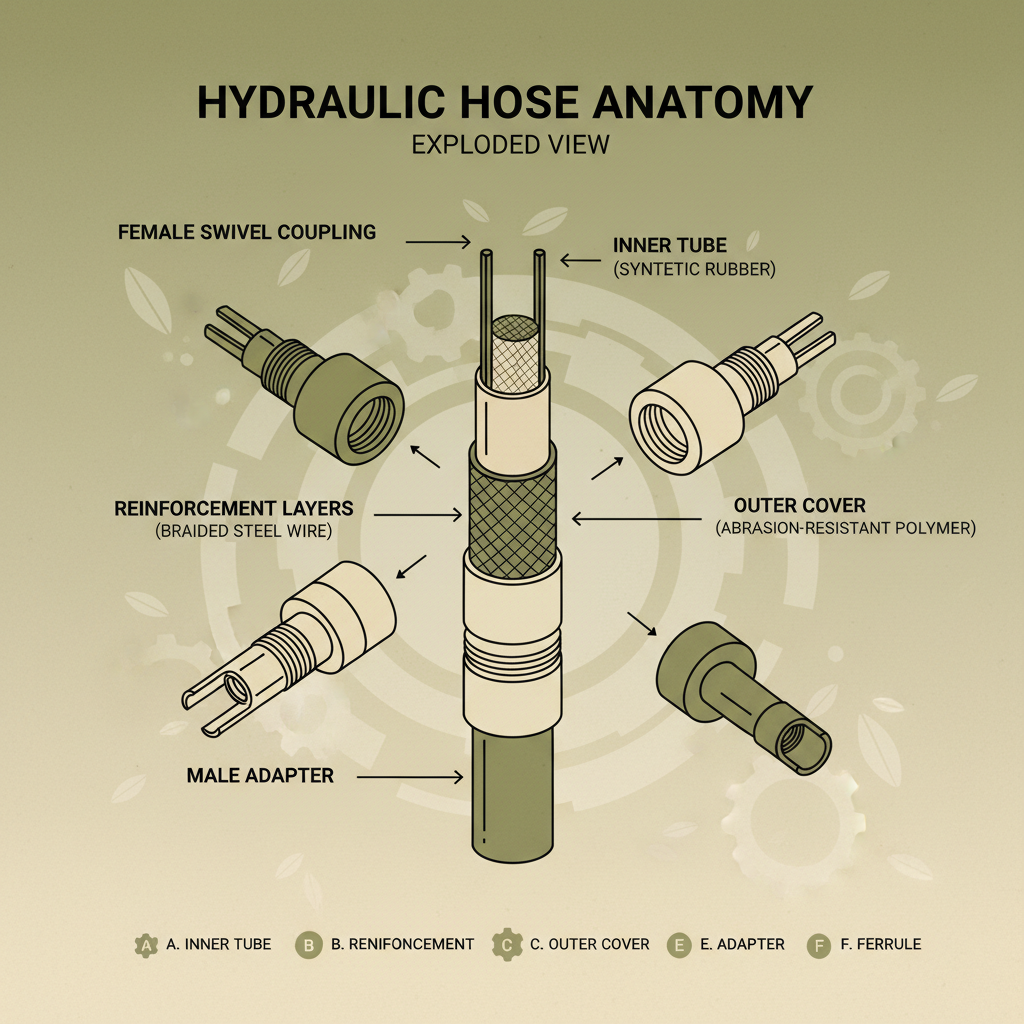
Another common mistake is using incompatible fittings. You can't just slap any fitting onto any hose and expect it to hold. You need to consider the material compatibility, the sealing method, and the torque specifications. I encountered a situation last month where someone used a metal fitting on a PVC hose without a proper liner. The dissimilar metals caused galvanic corrosion, and the hose failed within a week.
Really, the biggest pitfall is designing to a budget instead of designing for the application. Cutting corners on materials or fittings almost always leads to problems down the line, and those problems cost a lot more to fix than the initial savings.
Material Selection & Handling of pvc hose supplier
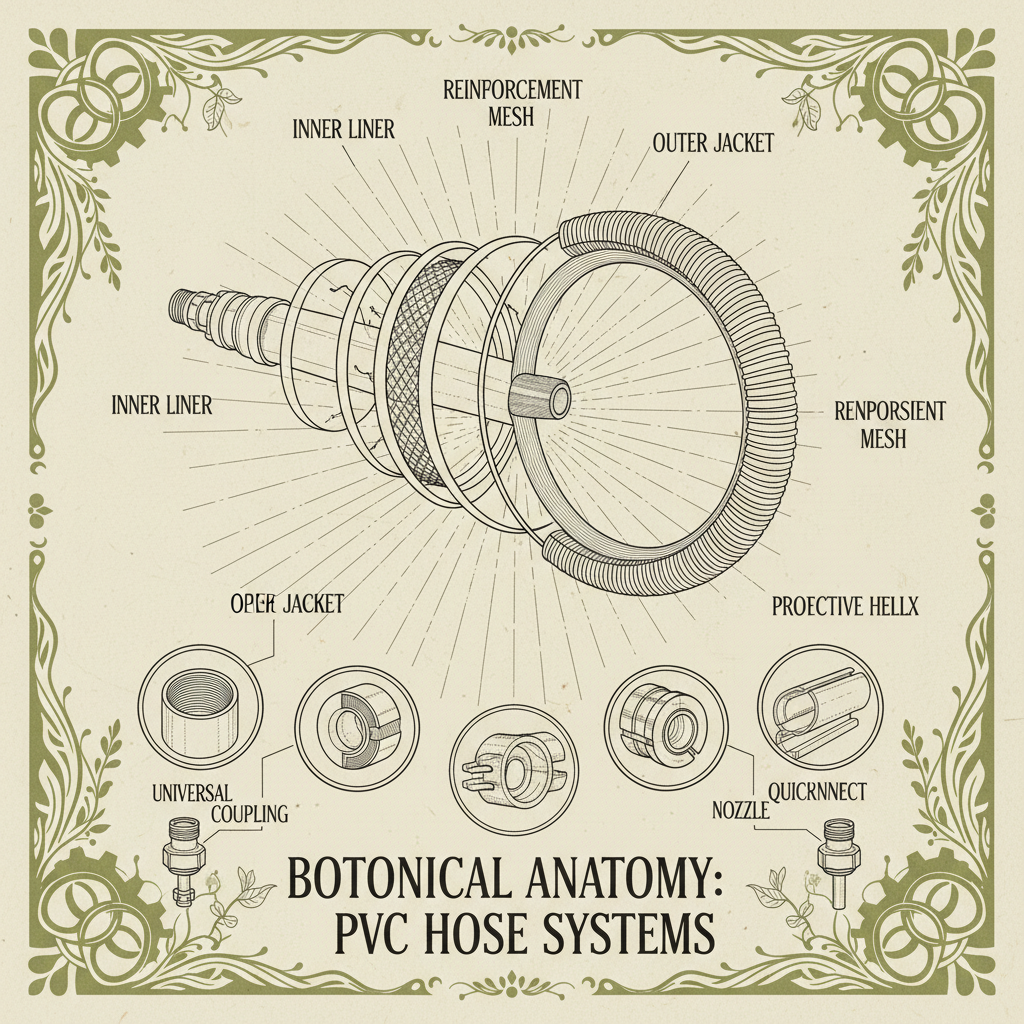
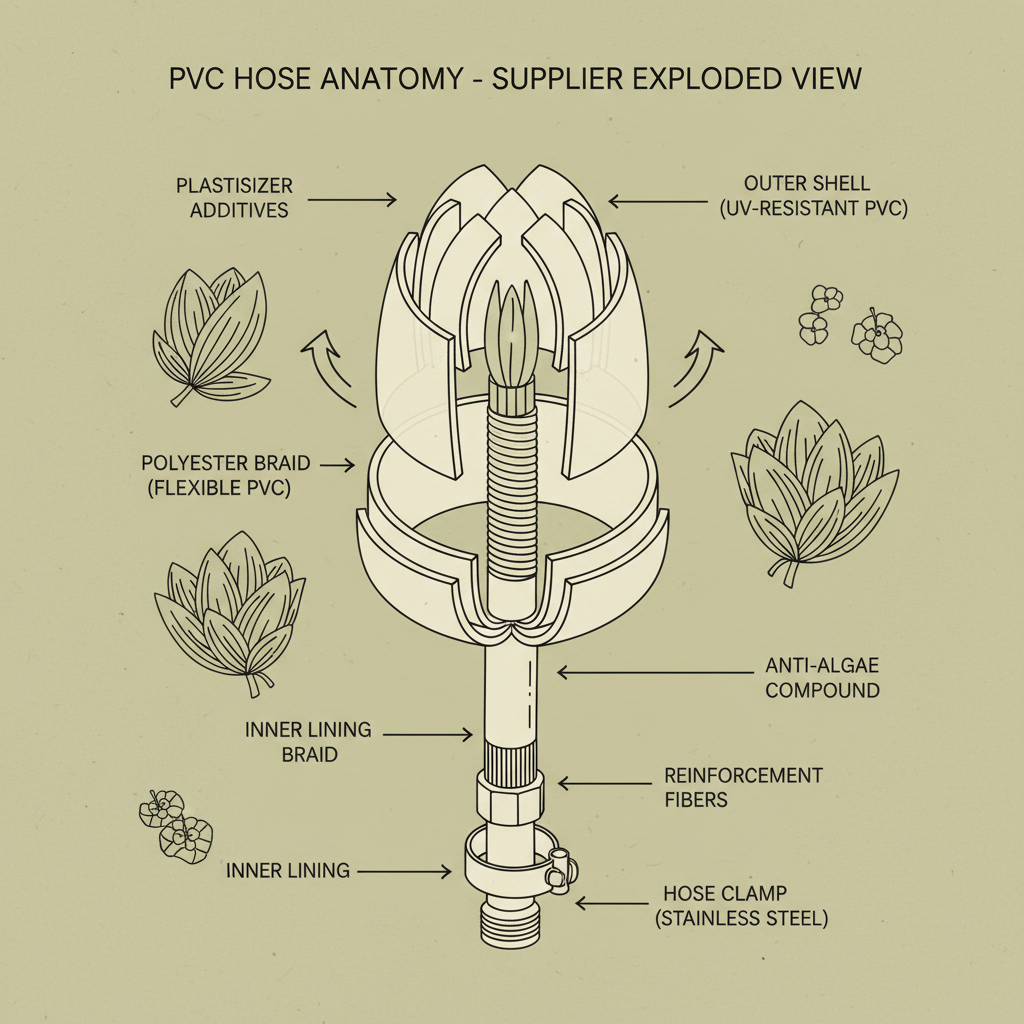
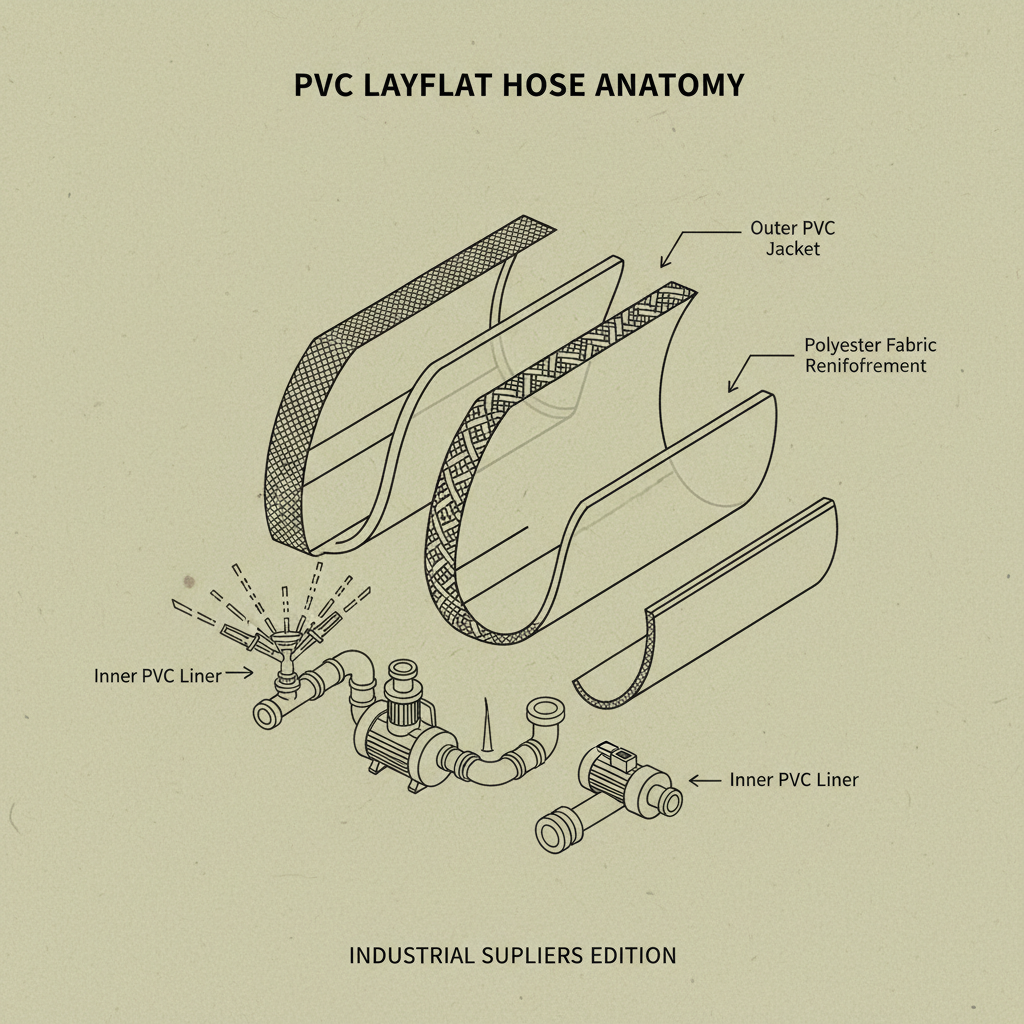
Like I said, it's not all just "PVC." You've got different grades, different plasticizers, different reinforcing materials. For heavy-duty applications, you want a hose with a polyester braid reinforcement. Gives it extra strength and prevents kinking. And the plasticizer is crucial. Phthalate plasticizers are cheap, but they can leach out over time, making the hose brittle. We always specify non-phthalate plasticizers, even if it costs a bit more.
Handling is important too. Don’t leave PVC hoses sitting in direct sunlight for extended periods. UV exposure will degrade the material. And store them properly – coiled loosely, away from sharp objects. I once saw a whole shipment of hoses ruined because someone stacked a pile of steel pipes on top of them. It was… a bad day for everyone involved.
We use a lot of different colors for coding – red for hydraulic, blue for water, yellow for air. It seems simple, but it can prevent a lot of accidents. We also use different wall thicknesses depending on the application. Thicker walls mean higher pressure ratings and better abrasion resistance, but they also make the hose heavier and less flexible. It's all about finding the right balance.
Real-World Testing & Performance of pvc hose supplier
Forget the lab tests. Those are fine for baseline measurements, but they don't tell you how a hose will actually perform on a job site. We do burst testing, of course, but we also do fatigue testing – repeatedly pressurizing and depressurizing the hose to simulate real-world use. We'll even drag hoses across concrete and gravel to test abrasion resistance.
And we’ve started doing field trials. We give samples to contractors and ask them to use them in their actual work. It’s the best way to get honest feedback. One contractor told us our previous hose design was impossible to unroll in cold weather – it would just kink up. We redesigned it based on that feedback, and it’s been a huge success.
pvc hose supplier Performance Metrics
Actual User Applications of pvc hose supplier
You’d be surprised where PVC hoses end up. We supply them for everything from irrigation systems to chemical transfer to fire suppression. One of the biggest markets is construction dewatering – pumping water out of excavations. Those hoses take a beating. Another big one is agriculture. Farmers need reliable hoses for everything from spraying pesticides to irrigating crops.
They’re also surprisingly popular in the entertainment industry. Movie sets use them for all sorts of things – creating artificial waterfalls, simulating rain, even powering special effects. Anyway, I think the versatility is what makes PVC so popular. It's not the fanciest material, but it gets the job done.
Advantages and Disadvantages of pvc hose supplier
The advantages are obvious: cost-effective, lightweight, flexible, and corrosion-resistant. You can't beat it for price. But…it’s not perfect. It’s susceptible to UV degradation, as we discussed. It can become brittle in cold weather if you don't get the right formulation. And it's not ideal for extremely high-temperature applications. There's always a trade-off.
It’s also worth noting that PVC isn't the most environmentally friendly material. It's recyclable, but the recycling infrastructure isn’t always in place. We’re looking at bio-based PVC alternatives, but they're still pretty expensive and don't perform quite as well. It's a work in progress.
But honestly, for 80% of applications, PVC is the sweet spot. It hits the right balance between performance, cost, and availability.
Customization Potential of pvc hose supplier
We do a lot of customization. Different lengths, different diameters, different fittings. We can add abrasion-resistant coatings, UV stabilizers, even flame retardants. Last month, that small boss in Shenzhen who makes smart home devices insisted on changing the interface to on a small drainage hose. He thought it would be "more modern." It was a disaster. The connector was too bulky and kept getting snagged. He ended up going back to a standard threaded connection. But, hey, you gotta let people experiment, right?
We can also customize the hose color to match a customer's branding. It’s a small thing, but it can make a big difference. And we can even add custom labels and markings. Anything to make the hose fit the specific application.
One of the most common requests is for reinforced hoses with specific pressure ratings. We work closely with our manufacturing partners to develop custom formulations that meet those requirements.
Overview of Key PVC Hose Supplier Characteristics
| Key Characteristic |
Impact on Performance |
Typical Rating (1-10) |
Customization Potential |
| Flexibility |
Ease of routing and handling in tight spaces |
8 |
High – varying plasticizer content |
| Pressure Resistance |
Ability to withstand high fluid pressures |
7 |
Medium – reinforcement layers |
| UV Resistance |
Longevity when exposed to sunlight |
4 |
High – UV stabilizer additives |
| Chemical Resistance |
Compatibility with various fluids and chemicals |
6 |
Medium – specialized PVC compounds |
| Abrasion Resistance |
Resistance to wear and tear from friction |
5 |
Medium – protective coatings |
| Cost |
Overall material and manufacturing expense |
9 |
Low – material choices |
FAQS
Honestly, it's usually a combination of things. Over-pressurization is a big one. Also, abrasion from dragging hoses across rough surfaces. And, surprisingly often, people just use the wrong type of hose for the application. They grab whatever’s handy instead of thinking about what the hose needs to withstand. Proper storage also plays a role – leaving hoses exposed to the sun will degrade them quickly.
You need to consider both the working pressure and the burst pressure. The working pressure is the maximum pressure the hose can handle continuously. The burst pressure is the pressure at which the hose will fail. Always choose a hose with a working pressure that’s significantly higher than the maximum pressure you expect to encounter. And factor in any potential pressure surges.
Phthalate plasticizers are cheaper, but they're known to leach out over time, making the hose brittle and potentially posing environmental and health risks. Non-phthalate plasticizers are more expensive, but they're safer and more durable. We always recommend using non-phthalate plasticizers, even if it adds to the cost.
Small leaks can sometimes be patched with a PVC repair kit, but it’s usually a temporary fix. It really depends on the location and size of the leak. For anything more than a minor pinhole, I'd recommend replacing the hose. Trying to repair a damaged hose can be dangerous, especially if it’s under pressure.
Store them coiled loosely in a cool, dry place, away from direct sunlight and sharp objects. Don’t stack heavy objects on top of them. And if you’re storing them outdoors, cover them with a tarp to protect them from the elements. Simple stuff, but it makes a big difference.
Bio-based PVC is the big one. Trying to find sustainable alternatives to traditional PVC. It's still early days, and the performance isn't quite there yet, but there's a lot of research and development going on. Also, improvements in reinforcement materials are constantly happening, making hoses stronger and more durable.
Conclusion
Ultimately, whether this thing works or not, the worker will know the moment he tightens the screw. All the engineering, all the material science, all the testing… it doesn’t matter if the hose kinks up, bursts under pressure, or falls apart after a week. That's the honest truth. We’re just trying to build something that holds up, something that makes their job a little easier.
The industry is always evolving, with a push toward lighter, more durable, and more sustainable materials. The key is to stay grounded in reality. Understand the challenges that workers face on the job site, and design products that address those challenges. Because in the end, it’s not about fancy features or impressive specs – it's about reliability.