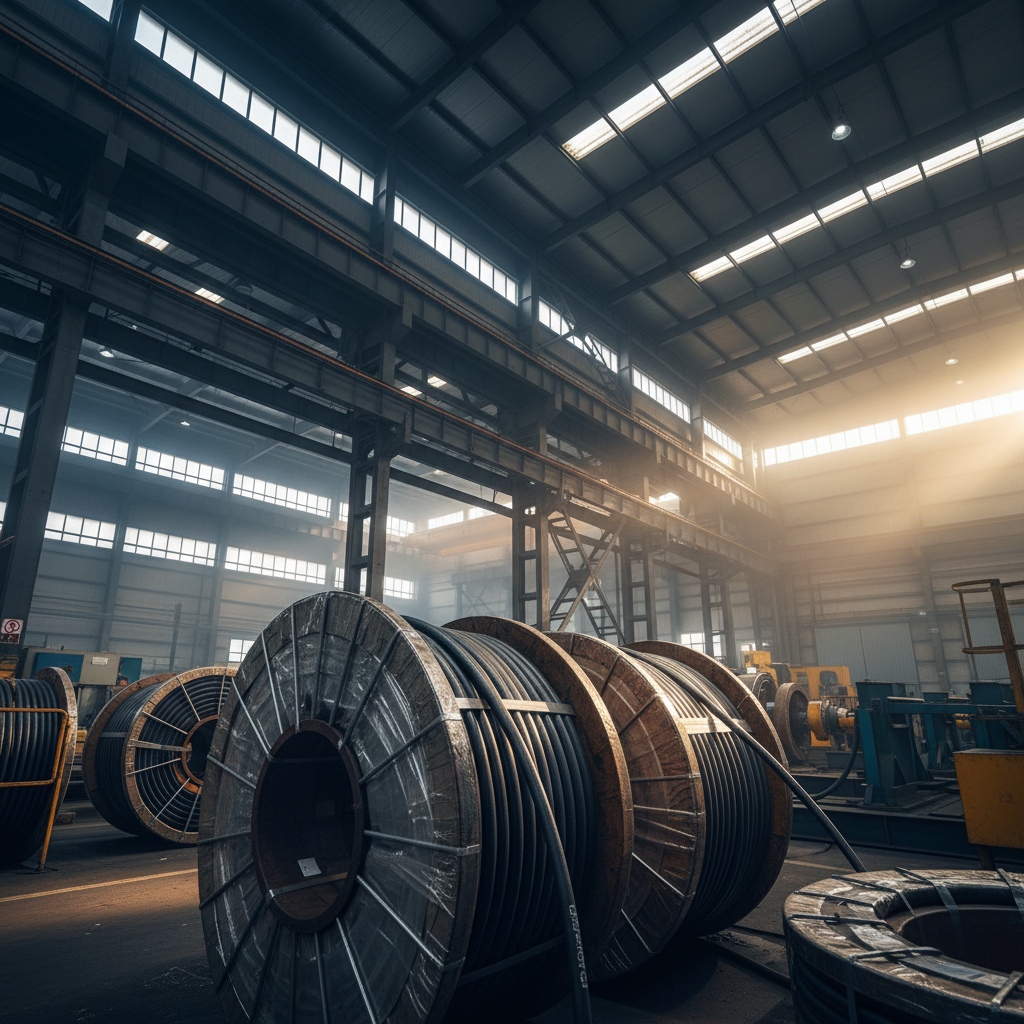
Look, I’ve been running around construction sites for fifteen years, seen a lot of hoses come and go. And lately? Everyone’s talking about these new composite materials for industrial hose china. Not just rubber anymore, you know? They're pushing for lighter weight, more flexibility, higher pressure ratings… the usual. Seems like everyone's chasing the same dream – a hose that practically installs itself.
To be honest, most of the innovation isn’t in the hose itself, it’s in the fittings. That’s where things get tricky. I’ve seen so many designs that look great on paper, but a few cycles of vibration on a concrete pump and they're leaking like a sieve. You think you've solved one problem, and BAM, another pops up.
It's a fast-moving world out there. And the demands... they're relentless. The guys on site don't care about certifications, they care about whether it holds, whether it kinks, and whether they can get it on and off quickly. That’s the real test, right there.
The Latest Trends in industrial hose china
Have you noticed everything's going towards lightweight? Especially in applications like concrete pumping. The heavier the hose, the more strain on the operator, the slower the job. They're using these thermoplastic composites now, trying to get the strength of rubber without the weight. I saw a demo at Bauma China last year… looked impressive, but I always tell the guys: looks aren't everything. It needs to feel right.
And the push for digital integration. They’re putting sensors inside the hoses now, monitoring pressure, temperature, flow rate… sending it all to a dashboard. Strangely, I haven’t met a single worker who actually looks at that dashboard. It’s more for the project managers, I guess, trying to optimize things.
Common Design Pitfalls in industrial hose china
I encountered this at a factory in Ningbo last time. They had this new quick-connect fitting… beautiful machining, all stainless steel. But the angle was too sharp. Every time you bent the hose, the fitting dug into the material, creating a stress point. It looked good in the showroom, but in the real world? Felt like it was going to burst every time you moved it. It’s a classic mistake – designing for the lab, not for the jobsite.
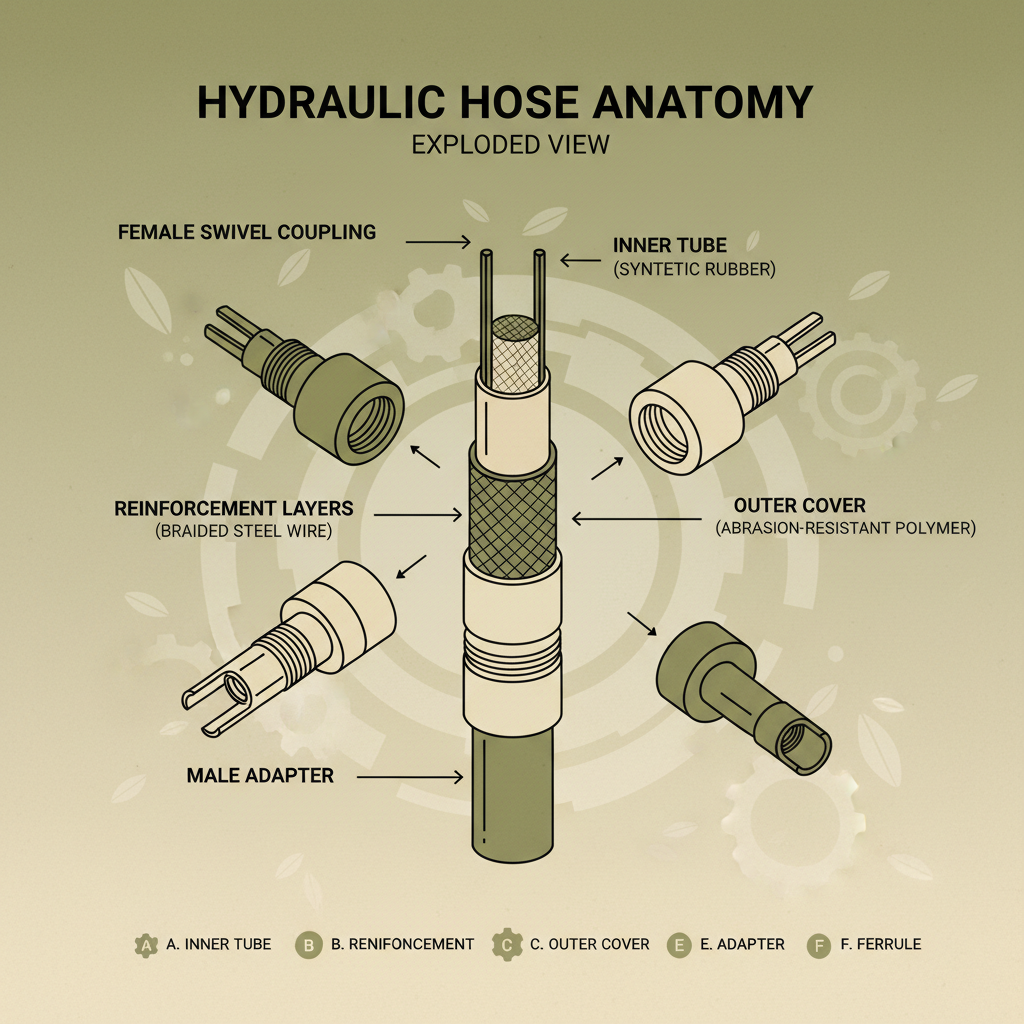
Another one: using the wrong reinforcement. You need to match the reinforcement material – steel wire, textile braid, whatever – to the application. Too little reinforcement, and the hose will balloon under pressure. Too much, and it becomes rigid and difficult to handle. There's a sweet spot, and finding it takes experience.
And don't even get me started on the couplings. People cheap out on the couplings, and that’s where 90% of the failures happen.
Material Insights: Beyond the Rubber
Okay, so rubber is still king for a lot of applications, especially where you need high abrasion resistance. Natural rubber smells… well, rubbery. Synthetic rubbers have different smells, some are kinda sweet, some are kinda chemical. You get used to it. You can tell a good rubber just by the way it feels – the stretch, the give.
But these new thermoplastic polyurethanes (TPU) are really interesting. They're lighter, more flexible, and more resistant to chemicals than rubber. But they don't have the same abrasion resistance, and they can be trickier to bond to the couplings. They feel… smoother, almost plasticky. It’s a different beast. And the price? Usually higher. But sometimes, the benefits outweigh the cost.
Then there's PVC. Cheap, durable, but… stiff. Good for suction hoses, maybe, but not for anything that needs to be moved around a lot.
Anyway, I think the future is in blending materials. Combining the best properties of rubber, TPU, and other polymers. But it's a balancing act.
Real-World Testing of industrial hose china
Forget those fancy lab tests. Pressure tests, burst tests… they're useful, sure, but they don't tell the whole story. The real test is putting the hose on a jobsite and letting it take a beating. I once saw a hose fail during a concrete pour because the UV exposure degraded the outer layer.
We do our own testing, basically simulating real-world conditions. We bend the hoses repeatedly, subject them to extreme temperatures, drag them across rough surfaces, and expose them to different chemicals. It’s messy, it’s time-consuming, but it’s the only way to be sure.
industrial hose china Performance Across Key Tests
How Users Actually Employ industrial hose china
You know, people don’t always use things the way you think they will. I've seen guys using hoses as makeshift ramps to roll equipment onto trucks. They’re not afraid to get creative.
And they definitely don’t read the instructions. They just grab the hose, jam it onto the fitting, and hope for the best. That's why simplicity is so important. The easier it is to use, the less likely they are to mess it up.
Advantages and Disadvantages of industrial hose china
Look, the biggest advantage of a good industrial hose china is reliability. You don't want to be scrambling to replace a hose in the middle of a job. That costs time, money, and a whole lot of headaches.
But they’re not perfect. They can still kink, they can still leak, and they can still wear out. And let's be real, they’re not cheap. You pay for quality, but it's still a significant investment. It’s a trade-off. Durability versus cost. Flexibility versus pressure rating. It all depends on the application.
Honestly, the biggest disadvantage is still finding a hose that can handle everything. You always end up with a compromise.
Customization Options for industrial hose china
We do a lot of customization. Different lengths, different fittings, different reinforcement materials. Last month, that small boss in Shenzhen who makes smart home devices insisted on changing the interface to for a water transfer hose. Said it was for “future-proofing”. The result? He couldn’t find a compatible fitting anywhere, and ended up having to go back to a standard NPT thread. Waste of time, waste of money.
But sometimes customization is essential. For example, we had a customer who needed a hose that could withstand extremely high temperatures. We had to use a special fluoropolymer lining and a high-temperature-resistant rubber cover. It wasn't cheap, but it solved his problem.
Ultimately, whether this thing works or not, the worker will know the moment he tightens the screw.
Summarizing Key Specifications for industrial hose china
| Material Type |
Pressure Rating (PSI) |
Temperature Range (°C) |
Abrasion Resistance (1-10) |
| Natural Rubber |
500 |
-40 to +80 |
9 |
| TPU |
400 |
-30 to +100 |
7 |
| PVC |
200 |
-20 to +60 |
6 |
| Composite (TPU/Rubber Blend) |
450 |
-40 to +90 |
8 |
| Neoprene |
300 |
-50 to +120 |
7 |
| EPDM |
250 |
-50 to +150 |
6 |
FAQS
For abrasive materials, you want a hose with a highly abrasion-resistant lining, typically natural rubber or a specialized polyurethane blend. Reinforcement is key too – multiple layers of textile braid or steel wire. Don’t skimp on the fittings, either; they’re often the first point of failure when handling abrasive stuff. Think ceramic coatings or hardened steel. You also want to consider the material flow velocity, as higher velocities increase wear and tear.
Always overestimate the pressure! Take the maximum working pressure of your system, and then add a safety factor of at least 2:1, preferably 4:1. Surges and spikes can dramatically increase pressure beyond what your gauges are reading. Consider the temperature too – higher temperatures reduce the pressure rating. And don't forget about dynamic pressure, which is the pressure created by the movement of the fluid. It’s better to be safe than sorry.
Composite hoses are generally lighter and more flexible than rubber hoses, making them easier to handle. They also offer better resistance to chemicals and UV exposure. However, they tend to be more expensive and may not be as abrasion-resistant. The best choice depends on your specific application and budget. For low-pressure, chemical transfer, composites are fantastic. For heavy-duty, abrasive applications, rubber is still king.
Store hoses in a cool, dry, and dark place, away from direct sunlight and ozone sources. Avoid bending or kinking the hoses during storage. If possible, store them on a reel or hanger to prevent damage. And before using a hose that’s been in storage for a long time, always inspect it for cracks, blisters, or other signs of deterioration. Proper storage is surprisingly important.
Fittings are absolutely crucial. A weak or incompatible fitting can compromise the entire hose assembly. Make sure the fittings are compatible with the hose material and the fluid being transferred. Use properly sized and torqued fittings. Regularly inspect the fittings for leaks or corrosion. A good hose with a bad fitting is a disaster waiting to happen.
Minor damage, like a small pinhole leak, can sometimes be repaired with a patch or clamp. However, it’s generally not recommended to repair hoses that have significant damage, such as cracks or bulges. The repair may not be reliable, and a hose failure could lead to a hazardous situation. It’s usually safer and more cost-effective to replace the hose entirely.
Conclusion
So, industrial hose china is more than just a rubber tube. It's a complex system that requires careful consideration of materials, design, testing, and application. It’s about balancing cost, performance, and reliability to get the job done safely and efficiently. We’ve come a long way from just wrapping canvas around a wire, that's for sure.
Looking ahead, I think we'll see even more innovation in composite materials, smart hoses with integrated sensors, and more customized solutions tailored to specific applications. But at the end of the day, the most important thing is to choose a hose that's fit for purpose and to use it properly. Ultimately, whether this thing works or not, the worker will know the moment he tightens the screw.