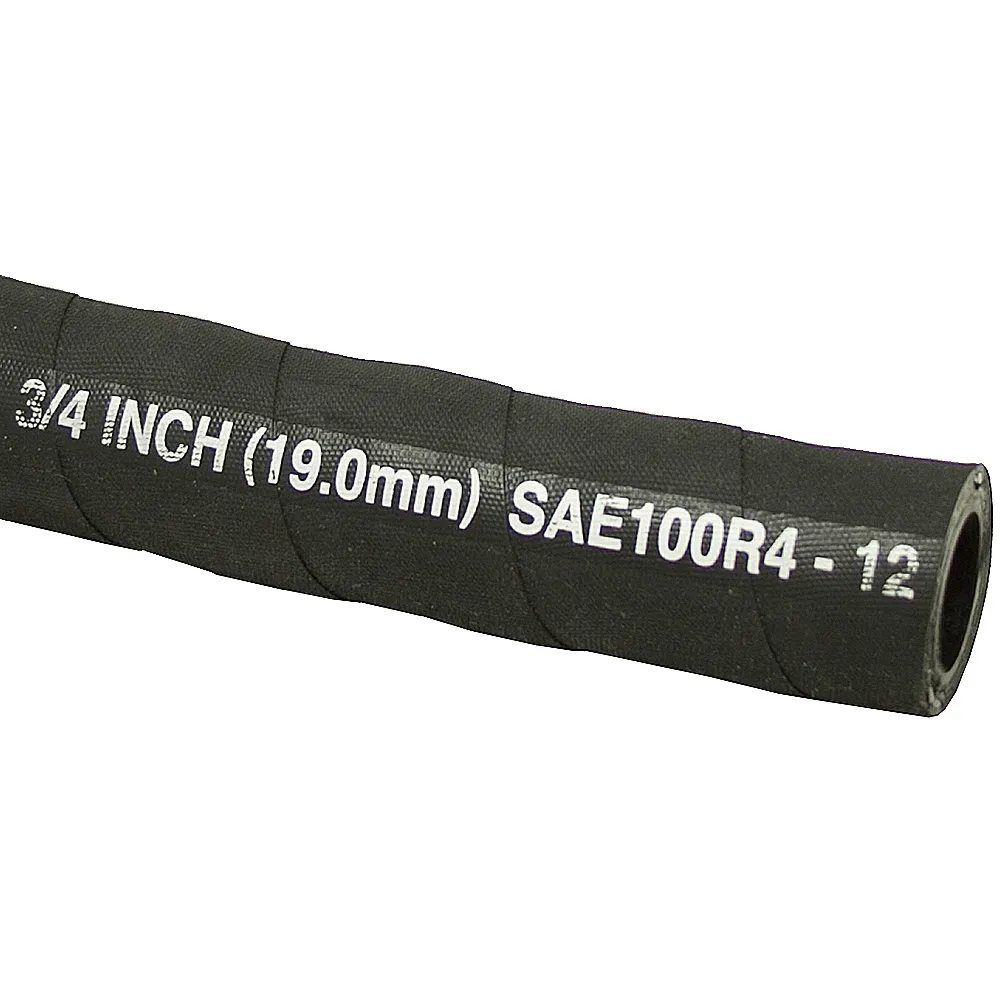

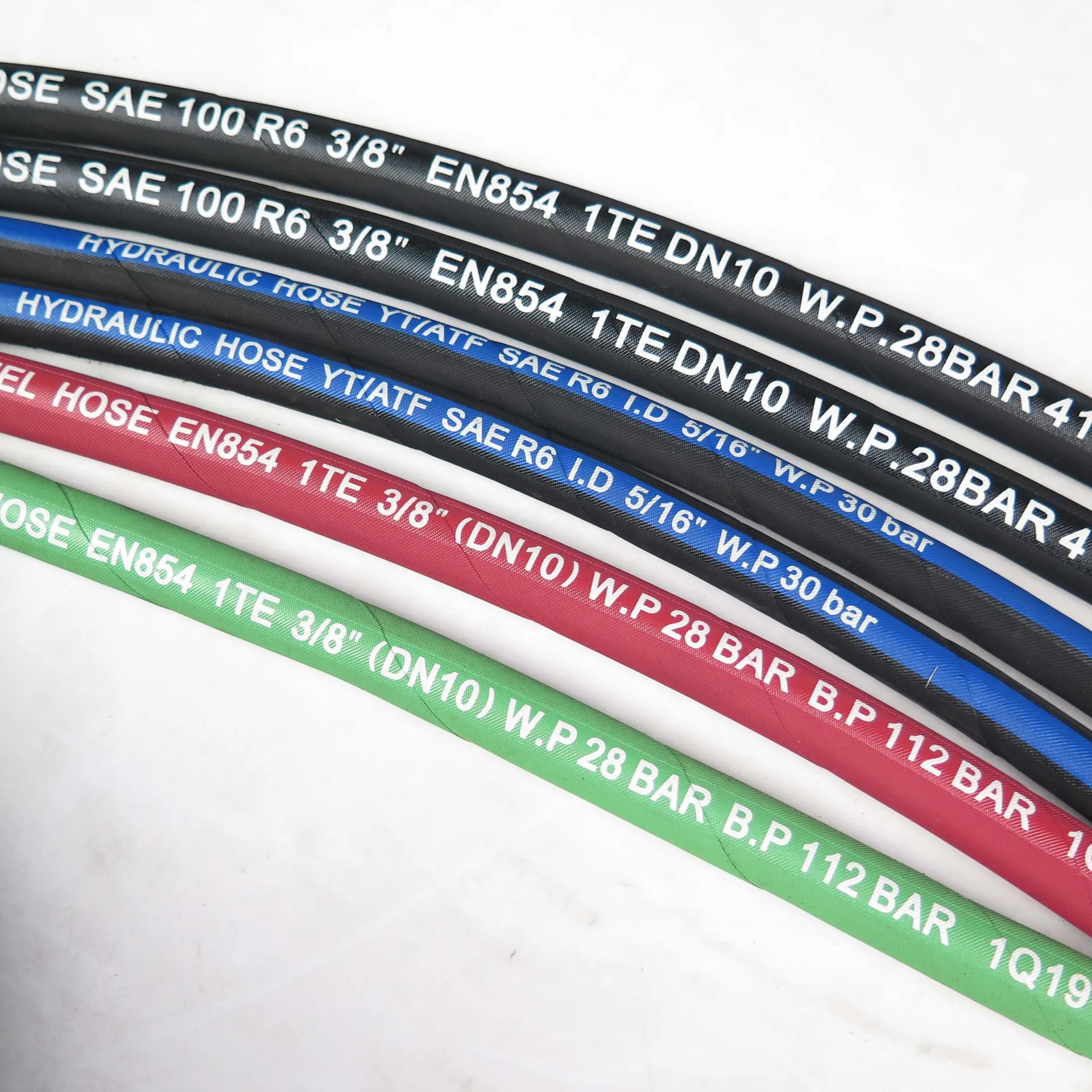
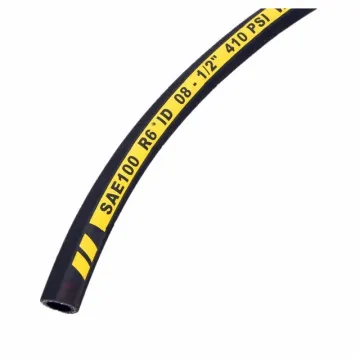
推奨用途:低圧油圧ライン。SAE 100R6ATの要件を満たすか、それを上回ります。
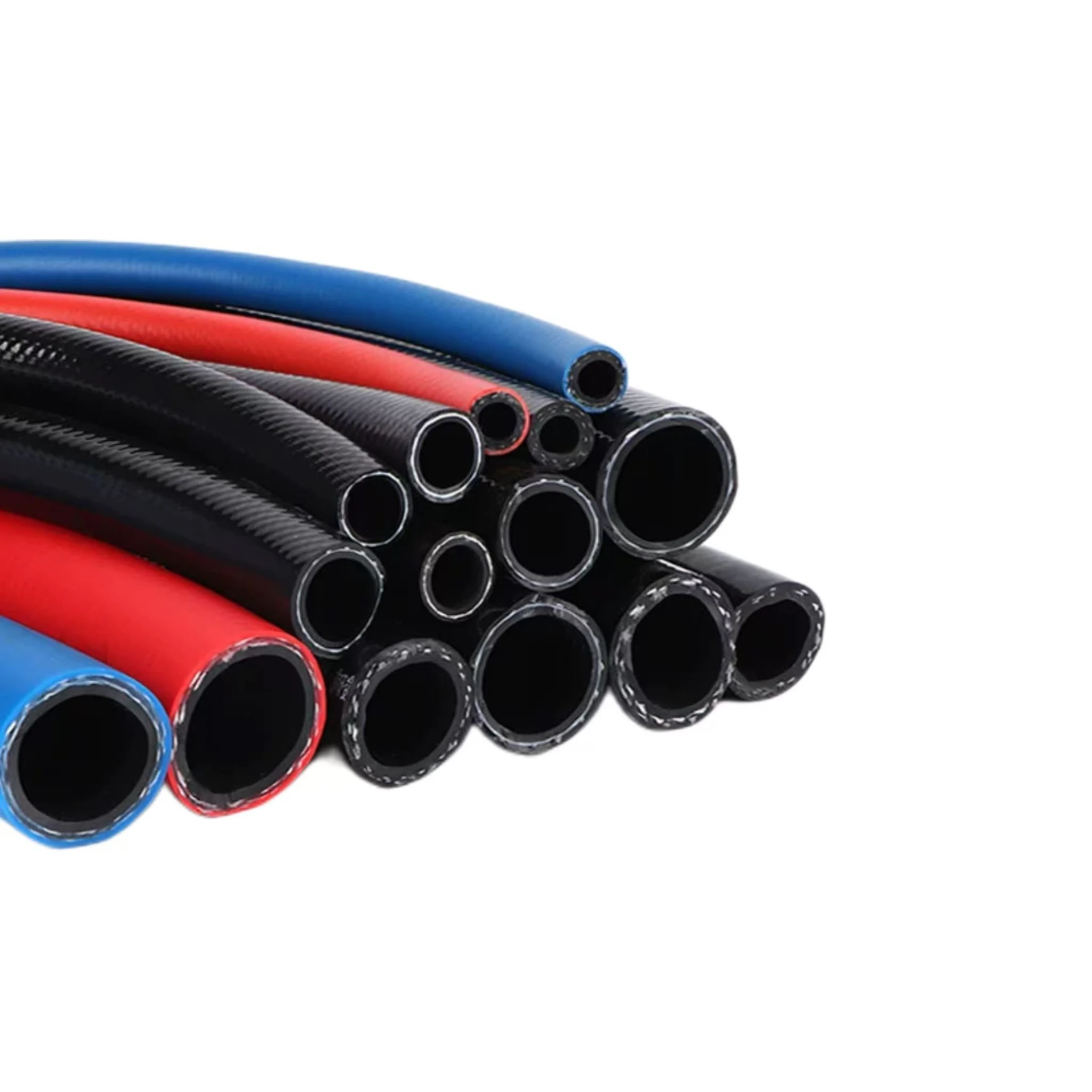
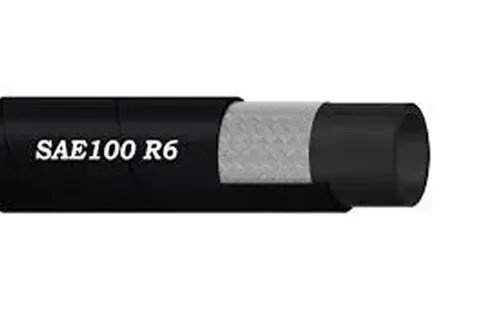
チューブ:黒色、耐油性、合成ゴム。
強化:1つの編組繊維層
カバー:黒色、耐油性、耐摩耗性、耐候性に優れた薄型合成ゴムです。
温度範囲:-40°F ~ +250°F (-40℃ ~ +121℃)
| Item Code | Hose I.D. | Hose O.D. | Working Pressure | Burst Pressure | Min.Bend Radius | 重さ | ||||||
| んん | インチ | 分 | 最大 | MPa | サイ | MPa | サイ | んん | インチ | kg/m | ポンド/フィート | |
| R6-05 | 5 | 3/16 | 10.3 | 11.9 | 3.5 | 507.5 | 14 | 2030 | 50 | 2 | 0.1 | 0.07 |
| R6-06 | 6.3 | 1/4 | 11.9 | 13.5 | 2.8 | 406 | 11.2 | 1625 | 65 | 2.6 | 0.13 | 0.09 |
| R6-08 | 8 | 5/16 | 13.5 | 15.1 | 2.8 | 406 | 11.2 | 1625 | 75 | 3 | 0.15 | 0.1 |
| R6-10 | 10 | 3/8 | 15.1 | 16.7 | 2.8 | 406 | 11.2 | 1625 | 75 | 3 | 0.18 | 0.12 |
| R6-13 | 12.5 | 1/2 | 19 | 20.6 | 2.8 | 406 | 11.2 | 1625 | 100 | 4 | 0.26 | 0.17 |
| R6-16 | 16 | 5/8 | 22.2 | 23.8 | 2.4 | 348 | 9.8 | 1420 | 125 | 5 | 0.31 | 0.21 |
| R6-19 | 19 | 3/4 | 25.4 | 27.8 | 2.1 | 305 | 8.4 | 1220 | 150 | 6 | 0.4 | 0.27 |
繊維強化油圧ホース SAE 100 R6
SAE 100 R6油圧ホースは、石油系および水系作動油の輸送に広く使用されています。3つの部品で構成されており、内外のゴムは合成ゴム、中間の補強材はSAE 100 R3油圧ホースと同じ1層の繊維編組です。補強材が1層の編組繊維で構成されているため、低圧用途で広く使用されていますが、ホースの柔軟性と軽量性が向上しています。
当社は、SAE 100R1、R2、R3、R6、EN 856 4sh、4spを含む油圧ホースおよび継手の専門メーカーおよび輸出業者です。これらの製品は自社工場で製造可能です。
当社の研究所では、原材料の試験を実施しており、生産前に各バッチの原材料を試験しています。高品質の材料を使用することで、当社の油圧ホースは安定した性能、優れた偏芯性、優れた耐油性を実現しています。
当社の工場では、最高品質の油圧ホースを製造するために高度な技術と設備を採用しています。すべてのホースにはそれぞれ品質追跡カードが付いており、各ホースが 100% 合格であることを保証しています。
生産完了後、ホースは梱包され、倉庫で保管され、積み込みを待ちます。通常は自動梱包機で透明なプラスチックフィルムまたはグロー織りの袋に梱包し、確実な梱包を保証します。お客様のご要望に応じて、特別な梱包も承ります。
当社は、競争力のある価格と優れたサービスで高品質の製品をお客様に提供できるよう準備しており、お客様と相互利益に基づいてビジネスを開始できることを心より願っております。
Why SAE 100R6 Hoses Are Perfect for Low-Pressure Hydraulic Applications
The SAE 100R6 hose is specifically engineered to be the ideal solution for low-pressure hydraulic applications by optimizing its design to prioritize flexibility, weight reduction, and cost-effectiveness while still maintaining essential fluid compatibility and durability.
The key factor making the SAE 100R6 perfect for this role is its reinforcement structure: it uses only one braids fiber layer. Unlike higher pressure hoses that require multiple layers of textile or steel wire, this single-layer textile braid provides sufficient strength for the low working pressures encountered in return and suction lines. This minimalist reinforcement significantly contributes to two major operational advantages: the hose is more flexible and light in weight. In systems where low pressure is sufficient, such as lubricating or return lines, using the lighter and more maneuverable SAE 100R6 reduces system mass, simplifies routing, and minimizes the effort required for installation and maintenance compared to heavier, over-engineered hoses.
Furthermore, the materials used ensure comprehensive fluid and environmental compatibility necessary for industrial use. The tube is made of black, oil resistant, synthetic rubber, guaranteeing the hose can reliably deliver petroleum and water based hydraulic fluids without internal degradation. Simultaneously, the outer cover is a thin, synthetic rubber that is designed to be oil, abrasion and weather resistant. This protective layer shields the single textile reinforcement from external damage and environmental factors, ensuring the hose maintains its low-pressure integrity and long service life even when exposed to oil spills or external elements.
The combined result of the single-braid reinforcement, chemical-resistant rubber layers, and light weight allows the SAE 100R6 hose to meet or exceed the requirements for low-pressure lines, making it the most appropriate and cost-effective choice where high bursting strength is not the primary requirement.
How Hydraulic Hose Design Impacts Flexibility and Performance in Industrial Systems
Hydraulic hose design is a critical determinant of both flexibility and performance within demanding industrial systems. The construction—specifically the inner tube material, the reinforcement method, and the outer cover—is precisely balanced to meet the operational parameters of pressure, temperature, and environmental exposure.
Flexibility is directly governed by the type and amount of reinforcement. For instance, the SAE 100R6 hose is designed with only one braids fiber layer to maximize flexibility and minimize weight, making it easy to route through tight spaces in industrial machinery. In contrast, higher-pressure hoses use multiple layers of textile or steel wire, which increases the hose's strength and pressure capacity but dramatically reduces its flexibility. The choice of reinforcement dictates the hose's minimum bend radius and handling characteristics, directly impacting its adaptability during system installation and reducing bending stress during operation.
Performance is determined by the material composition across all three layers. The tube material, typically oil resistant, synthetic rubber, is critical for chemical compatibility with the hydraulic fluid (like petroleum and water based hydraulic fluids). If the tube material is not oil-resistant, it will swell or degrade, leading to fluid contamination and system failure. The reinforcement layer ensures pressure containment, which is the primary performance requirement for any hydraulic system. Finally, the outer cover must be oil, abrasion and weather resistant to protect the internal reinforcement from external damage, which prevents premature failure and ensures the hose's rated performance is sustained over its long service life.
By varying the number of reinforcement layers (like one braid for SAE 100R6) and tailoring the rubber compounds for specific temperature and chemical resistance, hydraulic hose design allows manufacturers to create specialized hoses that achieve the precise balance of pressure rating, durability, and flexibility required for optimized operation in diverse industrial applications.
The Role of Single-Layer Textile Reinforcement in 100R6 Hydraulic Hose Flexibility and Longevity
The single-layer textile reinforcement is the defining characteristic of the 100R6 hydraulic hose and plays a specific, crucial role in its flexibility and longevity within low-pressure hydraulic circuits.
The single-layer textile braid is central to the hose’s exceptional flexibility. Because textile fibers are inherently more pliable than steel wire, and because there is only one layer, the hose can be bent and routed more easily than hoses with two or more layers of reinforcement. This design choice is fundamental to the hose's application as a low-pressure line, where the priority is ease of installation and low weight rather than extreme pressure containment. The high flexibility reduces the force required to manipulate the hose during assembly and minimizes mechanical stress on the hose structure when the machinery moves, thereby supporting the hose’s overall longevity by preventing fatigue-related failures.
However, this single layer must still ensure the hose's durability. The textile used is a high-strength fiber that provides sufficient tensile strength to contain the low-pressure hydraulic fluids and prevent the hose from swelling under its operating pressure. The single braid is protected by the outer cover, which is a thin layer of oil, abrasion and weather resistant, synthetic rubber. This cover shields the textile reinforcement from external elements like moisture, oil, and physical wear. Without this protective cover, the textile reinforcement would quickly wick up moisture or become frayed, leading to rapid material degradation and failure.
Thus, the single-layer textile reinforcement of the 100R6 hydraulic hose is a deliberate engineering choice: it provides just enough strength for low-pressure applications while maximizing the hose's flexibility and minimizing its weight. This design, protected by durable rubber layers, ensures the hose remains compliant, easy to handle, and maintains its functional integrity over a long period.

Z-Smartflex は、世界的に信頼される高品質の工業用ホースと継手を提供し、あらゆる流体移送ニーズに対応する耐久性のあるソリューションと優れたサービスを提供します。